What we've found
Our recent discoveries
What we've learned lately about how the brain turns experience into motivation, decisions, and habits — in plain language, with the papers behind each finding.
- 01
We discovered that dopamine does more than motivate reward seeking—it uses what we expect to happen to shape how we pursue a reward, shifting behavior from searching for rewards to checking for an expected reward when its arrival is strongly predicted.

- 02
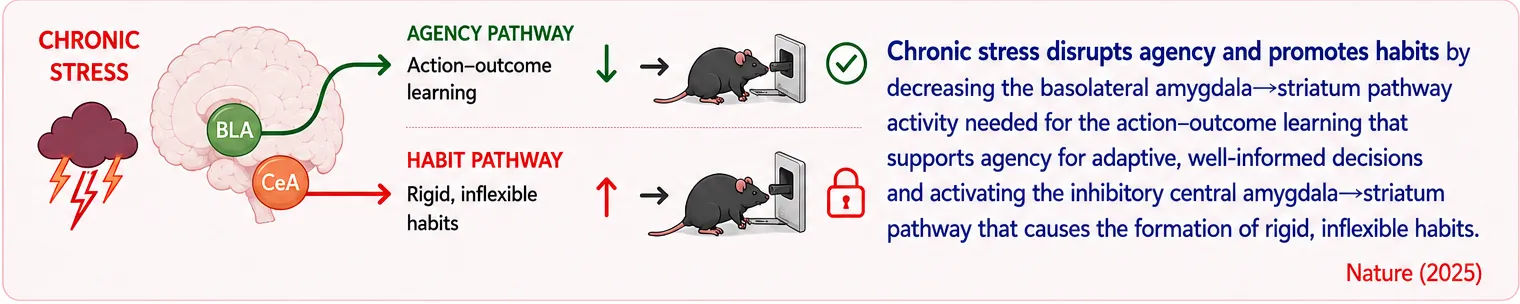
Chronic stress disrupts agency and promote habits by decreasing the basolateral amygdala→striatum pathway activity needed for the action-outcome learning that supports agency for adaptive, well-informed decisions and activating the inhibitory central amygdala→striatum pathway that causes the formation of rigid, inflexible habits.
- 03
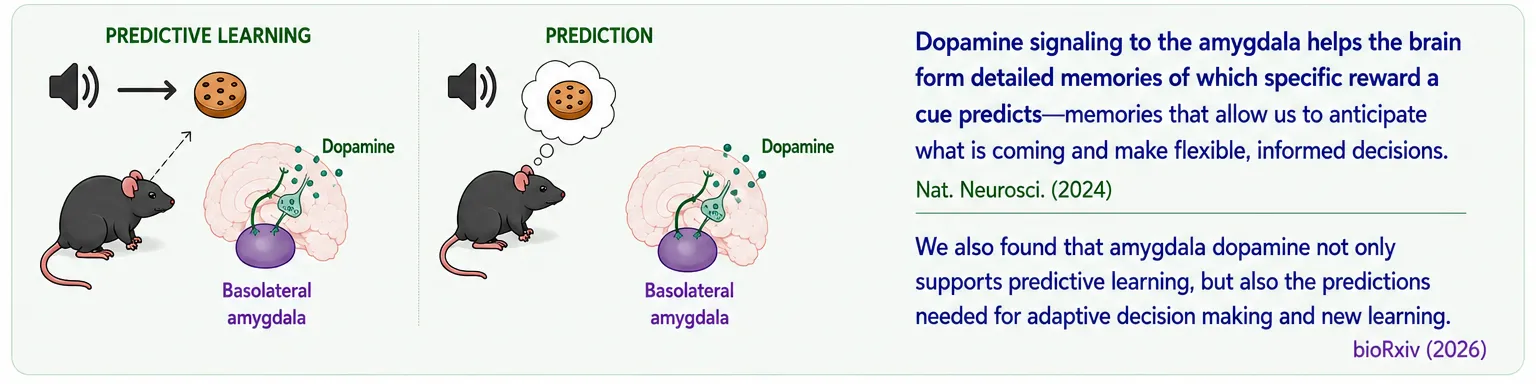
Dopamine signaling to the amygdala helps the brain form detailed memories of which specific reward a cue predicts—memories that allow us to anticipate what is coming and make flexible, informed decisions.
- 04
We also found that amygdala dopamine supports not only predictive learning, but also the predictions needed for adaptive decision making and new learning.
- 05
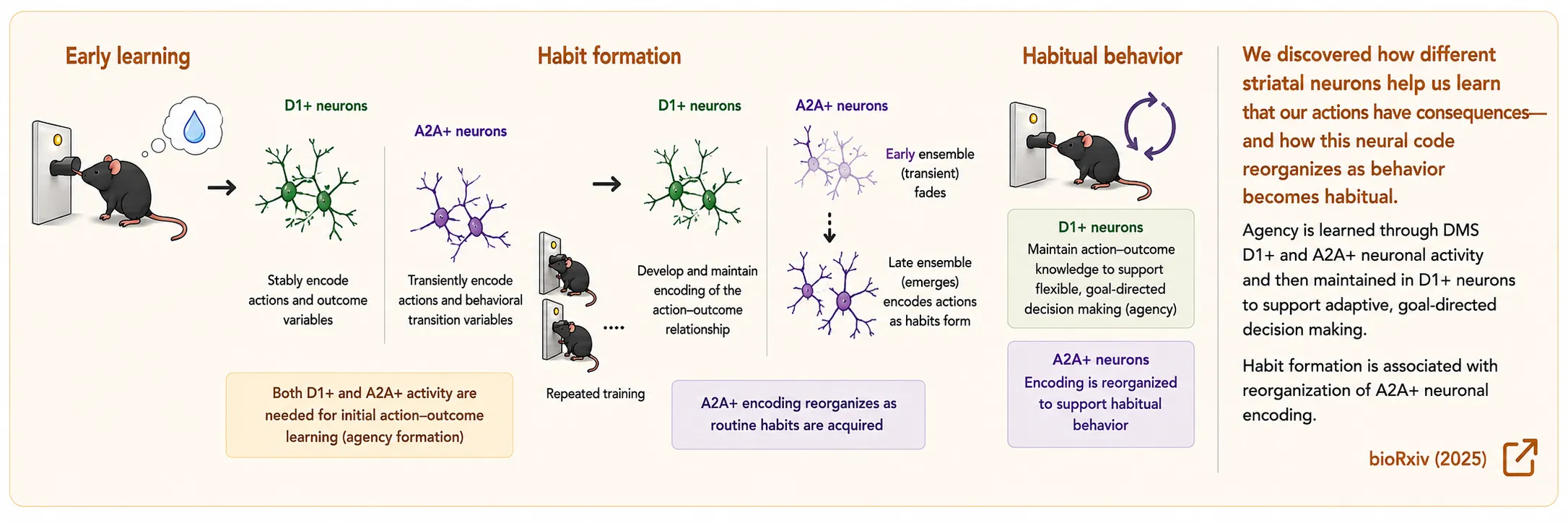
We discovered how different striatal neurons help us learn that our actions have consequences—and how this neural code reorganizes as behavior become habitual.